Audio in Access Control Systems: From Simple Feedback to Intelligent Entry Interfaces
As introduced in our broader look at audio in building safety and security systems, sound has long played a role in how systems communicate with users. In access control, that role has traditionally included status indication, alerts, and two-way communication through intercom-enabled entry systems.
What has changed is not the existence of these capabilities, but the level of integration and intelligence behind them. Modern access control systems increasingly combine audio with cloud connectivity, mobile credentials, video integration, and advanced authentication workflows. In this context, audio has evolved from a supporting feature into a more integrated part of the overall user interface and security experience. Check out these other blogs in our building safety and security series:
- Beyond Video: The Growing Role of Audio in Intelligent Surveillance Systems
- Audio Design for Fire and Life Safety Systems: Intelligibility, Compliance, and Reliability
The Shift from Simple Feedback to Interactive Interfaces
Early access control systems were designed around straightforward interactions. A user presented a credential, the system processed it, and a tone indicated the result, while more advanced installations incorporated intercom and telecommunication capabilities for remote entry management. The experience was quick but also limited.
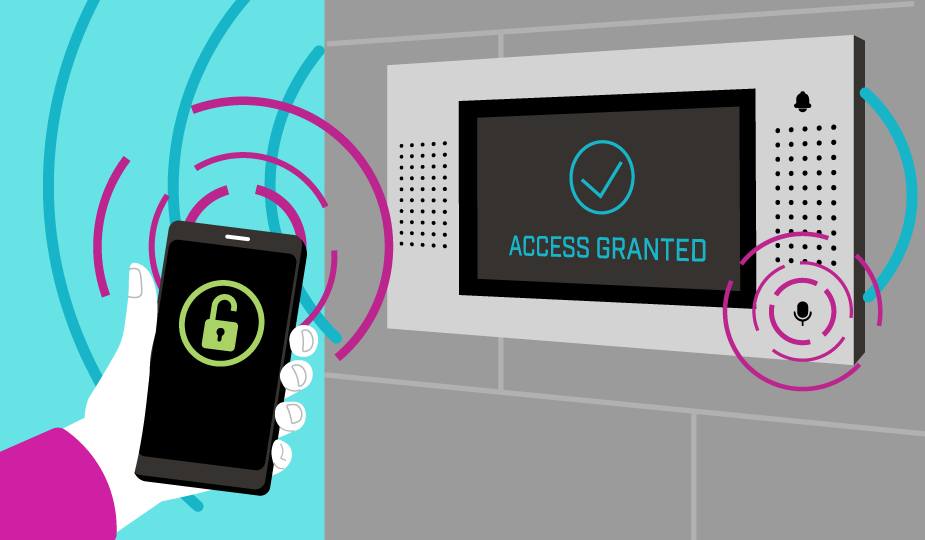
Today’s systems are more dynamic. Integration with cloud platforms, mobile credentials, and video-enabled entry points has expanded both functionality and complexity. Users may now interact with access systems in multiple ways, such as presenting mobile credentials via smartphone or following guided authentication steps.
As these interactions become more sophisticated, audio plays an increasingly important role in bridging the gap between system logic and user understanding. It provides immediate feedback, reinforces system actions, and, in many cases, guides users through the process itself.
Designing Effective Audible Feedback
Even as systems evolve, audible feedback remains the foundation of audio in access control. However, designing effective feedback is more nuanced than simply adding a buzzer.
At a basic level, audio must clearly communicate system status. A user approaching a secured door should be able to instantly recognize whether access has been granted or denied without needing to look at a display. This is particularly important in high-traffic environments where speed and clarity directly impact throughput.
The way these signals are designed has a measurable effect on usability. Key considerations include:
- Distinct tones or patterns that make outcomes immediately recognizable
- Minimal latency between user action and system response
- Output levels appropriate for the surrounding environment
These factors work together to reduce hesitation and reinforce user confidence in the system. If there is a delay or ambiguity in the feedback, users may repeat actions or assume the system has not responded.
Enabling Two-Way Communication at the Door
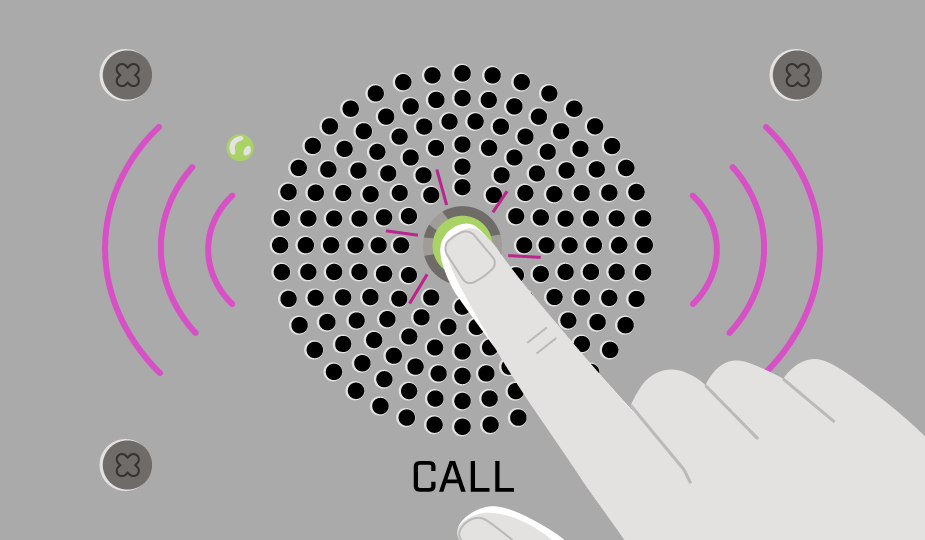
Two-way communication has been part of access control systems for decades, particularly in intercom-based entry systems. However, modern connected platforms have expanded both the scale and sophistication of these capabilities. Today’s systems often integrate audio directly with video, remote management platforms, and mobile applications, enabling more flexible and responsive communication workflows.
In intercom-enabled entry systems, speakers and microphones must work together within a constrained physical space. This creates challenges around echo, feedback, and overall intelligibility. Without proper design, audio from the speaker can be picked up by the microphone, degrading communication quality and making conversations difficult to follow.
Addressing these challenges requires both thoughtful component selection and system-level design. Acoustic isolation, signal processing techniques such as echo cancellation, and careful placement within the enclosure all contribute to clearer communication.
The benefit of getting this right is significant. Two-way audio enables remote access control decisions, allowing operators to verify visitors before granting entry. In residential, commercial, and secured facility applications, this adds both convenience and an additional layer of security.
Voice-Enabled and Touchless Entry Systems
The move toward touchless interfaces has further expanded the role of audio in access control systems. As physical interaction points are reduced, audio becomes a primary method for guiding users.
Voice prompts can walk users through multi-step processes, such as identity verification or visitor check-in, reducing confusion and minimizing the need for visual interfaces. This is particularly useful in environments where users may be unfamiliar with the system or where quick, intuitive interaction is critical.
At the same time, voice recognition technologies are beginning to appear as part of the authentication process itself. While still developing, these systems highlight a broader shift: audio is no longer just a way for systems to communicate outward, but also a means of receiving and interpreting user input.
This shift also has important implications for accessibility. Well-designed audio interfaces can make access control systems easier to use for individuals with visual impairments or limited mobility, helping ensure that modern security solutions are inclusive as well as functional.
Design Constraints in Access Control Devices
Unlike centralized building systems, access control devices are often installed directly at entry points, where they must operate reliably under less controlled conditions. This introduces a range of challenges that directly impact audio performance, including:
- Limited internal space within compact reader designs
- Exposure to temperature extremes, moisture, and dust
- Risk of tampering or obstruction at the device interface
From a mechanical perspective, these constraints require careful enclosure design. Protective features such as reinforced housings and acoustic grilles must prevent damage without restricting sound output or input.
Electrical considerations add another layer of complexity. Designers must balance performance with efficiency, particularly in systems operating on constrained power budgets. Key challenges include:
- Managing power consumption in PoE or battery-backed systems
- Handling peak current demands during audio playback
- Maintaining signal integrity in dense PCB layouts, especially for microphones
These factors make it clear that audio performance is not just about component selection; it depends heavily on how those components are integrated into the overall system.
Audio’s Role in Security and System Reliability
Beyond usability, audio also contributes directly to the effectiveness and reliability of access control systems. It supports several important security functions, including:
- Tamper alerts when devices are opened or compromised
- Audible deterrence during unauthorized access attempts
- Secondary confirmation of system actions
These capabilities provide immediate, localized awareness, even in situations where visual indicators may be missed.
Audio also plays a key role during fault conditions. If a system experiences an error or loses connectivity, audible notifications can inform users of the issue and, in some cases, provide guidance on next steps. This ensures that communication is maintained even when the system is not operating normally.
As with other safety-related applications, reliability is critical. Audio systems must perform consistently across normal operation, peak usage, and fault scenarios, reinforcing the need for a system-level design approach.
Conclusion
Audio in access control systems has moved well beyond simple beeps and buzzers. It now plays a central role in shaping how users interact with entry systems, how security decisions are communicated, and how reliably those systems perform in real-world conditions.
As access control continues to evolve toward more connected, interactive, and intelligent platforms, the importance of audio will only increase. Treating audio as a core design element, rather than an afterthought, allows engineers to create systems that are not only secure, but also intuitive and responsive.
Same Sky’s range of speakers, buzzers, and microphones is designed to support this full spectrum of access control applications, helping engineers balance performance, reliability, and integration in increasingly sophisticated entry systems.
Key Takeaways
- Audio has long supported status indication and communication in access control systems, with modern platforms placing greater emphasis on integration, interactivity, and intelligent system feedback
- Clear and immediate audible feedback improves usability, reduces hesitation, and increases throughput at entry points
- Two-way audio enables remote verification and adds an additional layer of security through intercom functionality
- Voice prompts and touchless interaction are expanding the role of audio in guided authentication and accessibility
- Compact form factors and outdoor deployment introduce mechanical, environmental, and acoustic design challenges
- Power constraints and signal integrity must be carefully managed, especially in PoE and densely integrated systems
- Audio can enhance security through tamper alerts, deterrence, and secondary confirmation of system actions
- Treating audio as a system-level design element leads to more intuitive, reliable, and effective access control solutions
 Tags:
Tags:
Additional Resources