Audio Design for Fire and Life Safety Systems: Intelligibility, Compliance, and Reliability
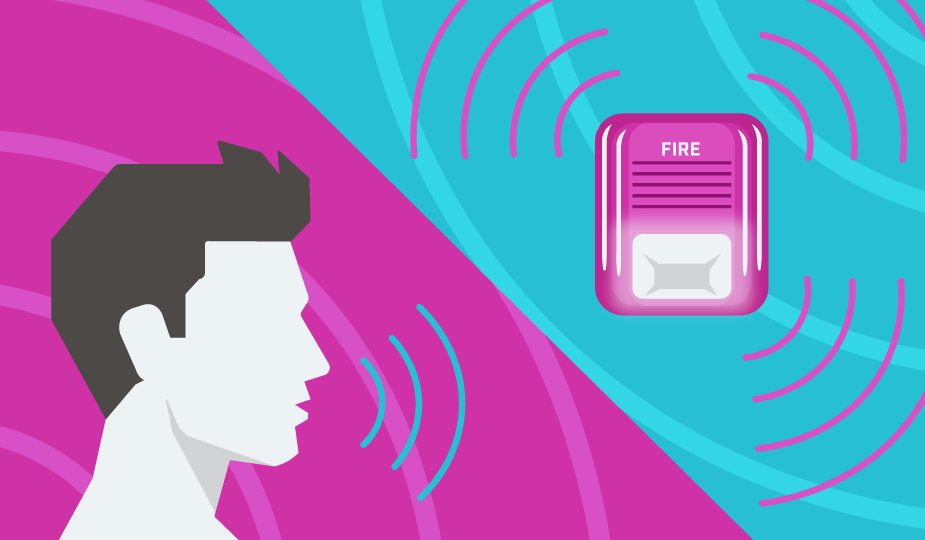
In fire and life safety systems, audio is not simply a feature, it is a critical means of communication during an emergency. When an alarm is triggered, audio becomes the primary way systems convey information, guide occupant behavior, and support safe evacuation.
This distinction changes how audio must be designed. Clarity, reliability, and compliance are not optimizations, they are requirements. Check out these other blogs in our building safety and security series:
- The Role of Audio in Modern Building Safety and Security Systems
- Audio in Access Control Systems: From Simple Feedback to Intelligent Entry Interfaces
- Beyond Video: The Growing Role of Audio in Intelligent Surveillance Systems
Audio as a Life Safety Backbone
Early fire alarm systems relied primarily on tone-based signaling. Bells, buzzers, and sirens were used to alert occupants that an event had occurred, but they provided little information beyond that initial warning.
Modern systems have evolved toward voice evacuation, where spoken instructions guide occupants during an emergency. This shift reflects a broader understanding: simply alerting people is not enough. They must also understand what action to take.
As a result, audio systems in life safety applications must be designed not only to be heard, but to be clearly understood under stressful and often chaotic conditions.
Alarm Signaling Fundamentals
Despite the shift toward voice systems, tone-based signaling still plays an important role in fire and life safety design. Different audio devices are used depending on the application and level of communication required. Common device types include:
- Buzzers and sirens for high-priority alert tones
- Speakers for voice evacuation and detailed instructions
Tone-based devices are effective for immediate attention and simple alerts, while speakers are required when intelligible communication is necessary.
At the system level, designers must also consider how alerts are deployed. Some signals are intended for localized notification, such as equipment-level alarms, while others must provide building-wide coverage. Differentiating between alert types ensures that occupants can quickly recognize the severity and nature of an event.
Voice Evacuation Systems
Voice evacuation systems represent a significant advancement over tone-only approaches. By delivering clear, spoken instructions, they reduce confusion and help guide occupants toward safe exits. These systems are typically integrated with centralized control panels, allowing operators or automated systems to broadcast messages across designated zones. In larger buildings, this often involves distributed speaker architectures, where multiple speakers are placed throughout the facility to ensure consistent coverage.
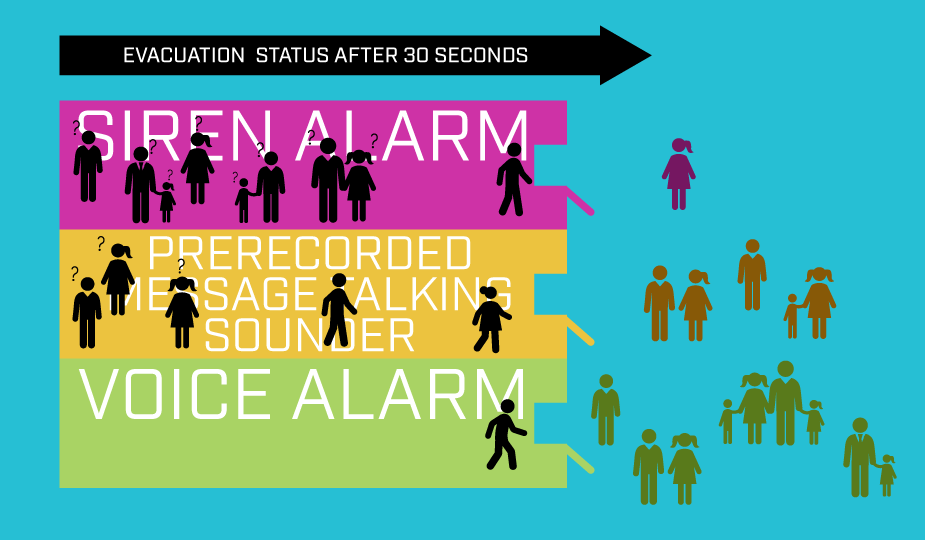
The effectiveness of these systems depends on more than just the presence of speakers. Messages must remain intelligible across different areas, each with unique acoustic characteristics and background noise levels.
Engineering for Speech Intelligibility
In emergency situations, audibility alone is not sufficient. A loud signal that cannot be understood is of limited value. This is why speech intelligibility is a primary design focus in life safety systems.
One of the first considerations is sound pressure level (SPL), which determines whether audio can be heard above ambient noise. However, increasing volume alone does not guarantee clarity. Intelligibility depends on how sound is reproduced across frequencies and how it interacts with the environment. Key factors that influence intelligibility include:
- Adequate sound pressure levels relative to ambient noise
- Frequency response that preserves the critical range of human speech
- Environmental acoustics, including reflections, reverberation, and background noise
These elements must be balanced carefully. Excessive volume can actually reduce intelligibility by introducing distortion or masking important speech cues, while poor frequency response can make speech sound muffled or unclear. Designing for intelligibility requires a system-level approach that considers both the audio hardware and the physical environment in which it operates.
System Reliability and Redundancy
In fire and life safety systems, reliability is paramount. Audio must function under all expected conditions, including during power disruptions, system faults, and emergency events. To achieve this, systems are designed with multiple layers of redundancy. Backup power sources, such as batteries, ensure continued operation during outages. Fault detection mechanisms monitor system health and alert operators to failures.
Component-level redundancy is also an important consideration. Avoiding single points of failure may involve:
- Using multiple speakers within a coverage area
- Designing redundant signal paths
- Ensuring critical alerts can be delivered through alternate channels
These strategies help maintain system functionality even when individual components fail, which is essential in life safety scenarios where communication cannot be compromised.
Environmental and Lifecycle Considerations
Fire and life safety systems must operate reliably in environments that can be far more demanding than typical commercial applications. During an emergency, audio components may be exposed to elevated temperatures, smoke, dust, and other contaminants. These conditions can affect both mechanical and electrical performance, making component selection and enclosure design critical.
In addition, these systems are expected to remain in service for long periods, often spanning many years or even decades. This places additional emphasis on durability, consistency, and long-term reliability. Designers must account for:
- Temperature tolerance across the expected operating range
- Resistance to contamination that may obstruct acoustic pathways
- Long-term performance stability over the product lifecycle
These considerations ensure that systems will perform as expected not just when installed, but throughout their operational life.
Compliance and System-Level Requirements
Fire and life safety systems are subject to strict regulatory requirements that define how audio must perform in real-world conditions. Unlike other applications, compliance is not optional. Standards such as NFPA 72 and UL 1480 establish guidelines for audibility, intelligibility, reliability, and system behavior during faults. These standards are typically applied at the system level, meaning that overall performance, not just individual components, must meet defined criteria.
This has important implications for design. Engineers must consider how components interact within the system, how performance is validated, and how compliance is maintained across different installation environments. Meeting these requirements requires a holistic approach that integrates electrical, mechanical, and acoustic design considerations from the outset.
Conclusion
In fire and life safety systems, audio serves as the primary link between the system and the people it is designed to protect. Its effectiveness directly impacts how quickly and safely occupants can respond during an emergency. Designing these systems requires a focus on intelligibility, reliability, and compliance at every level. From component selection to system architecture, each decision must support consistent performance under the most demanding conditions.
As building systems continue to evolve, the importance of well-designed audio will only increase. Same Sky’s portfolio of speakers and buzzers is designed to support these critical applications, helping engineers develop solutions that deliver clear, reliable communication when it matters most.
Key Takeaways
- Audio is the primary communication channel in fire and life safety systems and must perform reliably under emergency conditions
- Voice evacuation systems improve response by providing clear, actionable instructions compared to tone-only alerts
- Speech intelligibility depends on SPL, frequency response, and environmental acoustics—not just volume
- System reliability requires redundancy at both the system and component level to avoid single points of failure
- Environmental factors such as heat, smoke, and contamination must be considered in component selection and design
- Fire and life safety systems must comply with standards such as NFPA 72 and UL 1480
- A system-level design approach is essential to ensure consistent, compliant, and effective performance
 Tags:
Tags:
Additional Resources