Intelligent Motion Starts with Feedback: Why Encoder Technology Matters in Modern Motor Drives
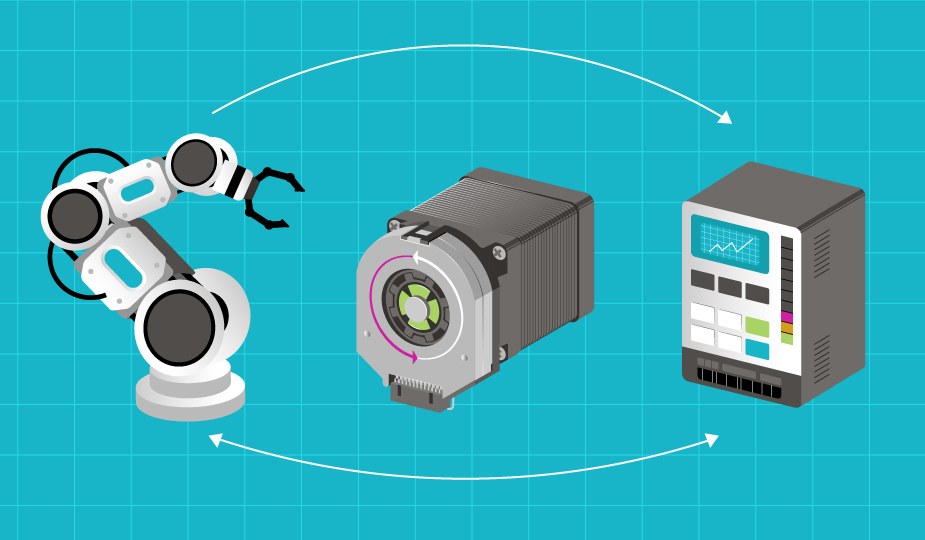
Factory automation has evolved from simple logic, cams, and limit switches into systems that demand complex, precise motor control. Modern equipment is expected to hit precise positions, hold stable speeds under changing loads, detect problems before they become downtime, and run for long stretches in environments that are anything but gentle. The common point across all of this capability is feedback. Encoders supply the data for real-time position and velocity information that turns a motor driver from “power delivery” into an intelligent control system. If the drive is the brain and the muscles, the encoder is the sense of where the system actually is. Without reliable feedback, precision motion control becomes guesswork.
Open-Loop vs. Closed-Loop Motor Control in Factory Automation
Early automation often relied on open-loop control. The controller commanded a motion profile and assumed the motor executed it. That approach can work for simple tasks or low-risk systems, but it breaks down the moment reality changes. Any load variation, belt stretch, mechanical wear, temperature drift, or external disturbances affect the relationship between intended outcome and actual outcome. Closed-loop control is the modern default for any system that cares about accuracy, repeatability, or robustness. In a closed-loop architecture, the encoder continuously measures motor position and speed, and the drive adjusts output in real time to keep the actual motion aligned with the commanded motion. That feedback loop is what enables higher performance behaviors such as accurate positioning, repeatable motion profiles, stable speed regulation under varying loads, faster settling, and reduced mechanical stress (because the system corrects earlier rather than overshooting and “fighting” itself). Closed-loop feedback enables:
- High positioning accuracy
- Repeatable motion profiles
- Consistent speed under varying loads
- Reduced mechanical stress
- Faster settling times
- Improved safety in collaborative environments
In practical terms, the difference shows up immediately when the system is stressed. If a conveyor load changes mid-cycle, open-loop control “doesn’t know” it happened; it just keeps issuing the same command and hopes the mechanics keep up. Closed-loop control sees the deviation through the encoder and corrects before the error becomes a missed index, a collision risk, or a quality issue. That’s why encoder selection tends to become more important as machines move from “it runs” to “it runs predictably, all day, under real conditions.”
How Encoders Enable Closed-Loop Motor Drive Systems
It is tempting to describe a motor drive as just the controller and power electronics, but real systems are broader than that. A typical motor drive system is better thought of as an integrated stack. You have the motor itself, a power source and the power conversion stage that conditions it, the controller that runs the control loops (either a DSP or MCU), and the feedback sensors that tell the controller what the motor is actually doing. Around that core, the system also needs inputs, outputs, and communications to exchange commands and status with the rest of the machine, plus protection circuitry to keep the drive, motor, and wiring safe in fault conditions.
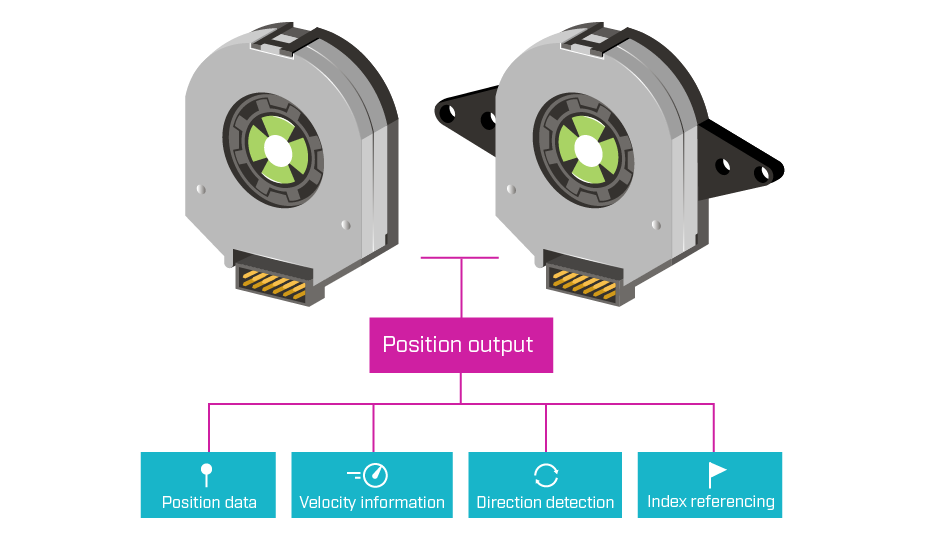
Within that architecture, the encoder is the feedback workhorse. It produces the data the controller uses to close the loop.
- Position data: To confirm where the rotor is (and therefore, where the load should be) after gearing and mechanics.
- Velocity information: To keep speed regulation stable even when loads vary.
- Direction detection: To ensure motion logic and safety behavior are deterministic.
- Index referencing: To establish a repeatable reference point during homing or startup.
This matters because the controller can only correct what it can measure. If feedback is noisy, inconsistent, or fragile under real operating conditions, the drive may still “work,” but the machine won’t feel precise. Accuracy degrades, tuning margins shrink, and nuisance faults become more common. In many designs, improving the feedback channel is the fastest way to improve motion quality without changing the motor or power stage.
Encoder Performance Requirements in Industrial Automation Environments
Industrial environments place unique demands on motion control systems. Equipment may operate continuously, experience vibration, or be exposed to dust, oil mist, and temperature variation. Encoder technology must keep delivering clean, stable feedback in that reality, not just in laboratory conditions. Key demands tend to cluster into a few categories: electrical robustness, mechanical durability, environmental tolerance, and integration practicality. If any of these is less optimized, the encoder becomes the limiting factor for the entire drive.
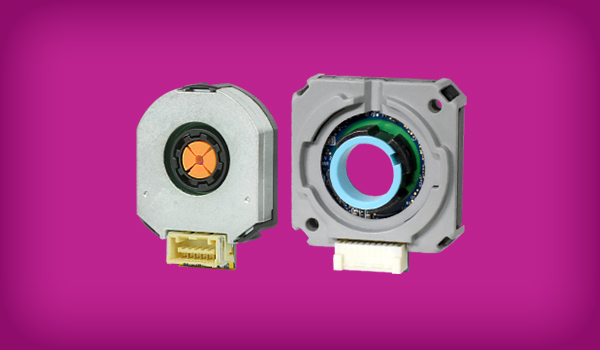
Architectures that avoid fragile optical components and instead rely on robust sensing mechanisms can offer advantages in contamination tolerance and vibration resistance, particularly in harsh factory environments where small reliability issues quietly turn into repeated recalibration, service calls, or downtime. This is also where it is fair to talk about technology fit, not just specs. For example, capacitive encoder architectures (such as AMT capacitive encoders from Same Sky) are often selected when teams want high resolution and accuracy while minimizing sensitivity to dust or oil that can challenge some optical designs. In a system that runs 24/7, working consistently is an ideal performance feature.
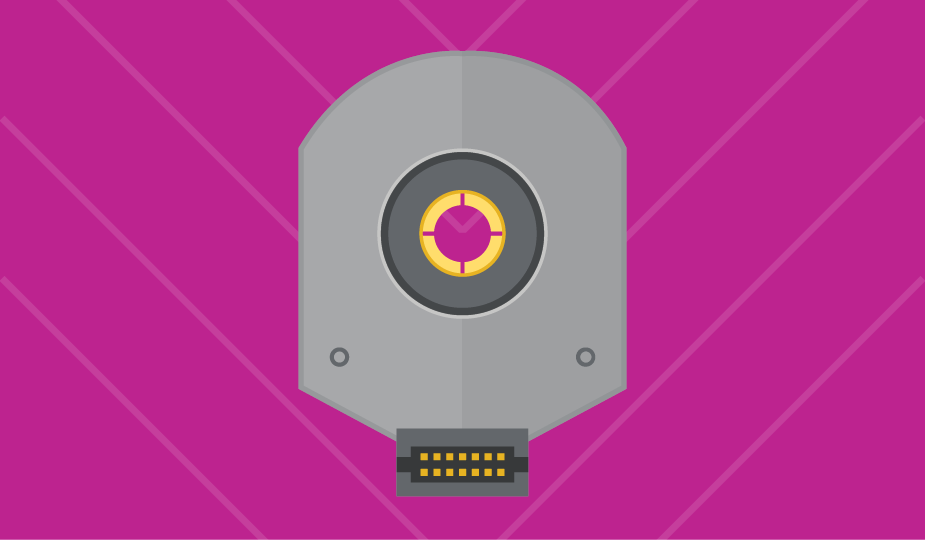
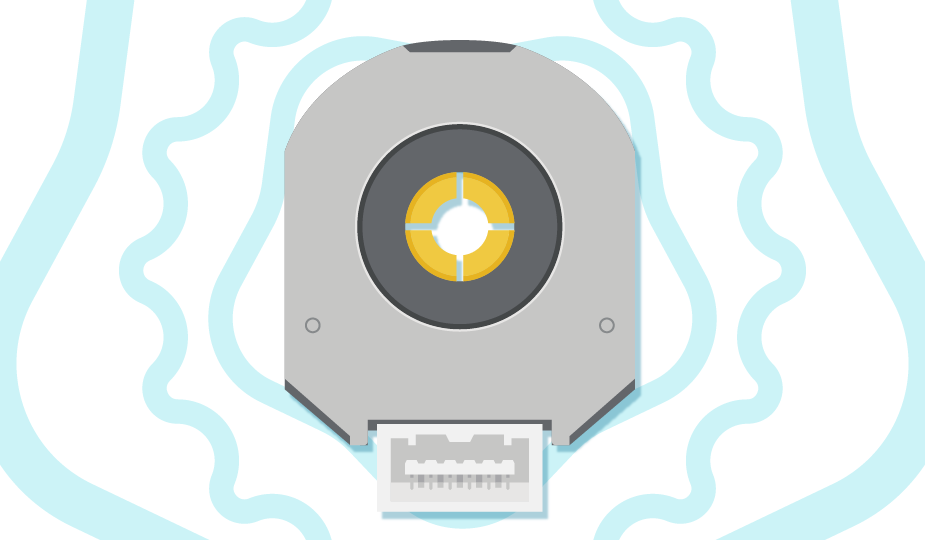
Capacitive encoders offer an ideal balance of high performance and industrial robustness, solving many of the common drawbacks of alternative technologies. Unlike magnetic encoders, which can deliver lower accuracy and resolution, capacitive technology is immune to both magnetic interference and temperature drift while providing greater precision. They are also more rugged compared to optical encoders. With no LED to fail and no line-of-sight requirement, they tolerate environmental contaminants like dust, dirt, and oil that can cause catastrophic failures for optical designs. The capacitive encoder also provides increased flexibility, allowing engineers to program the resolution on a single model to match multiple applications.
Encoder Resolution and Control System Optimization
Encoder resolution influences how finely the control system can measure angular position. But higher resolution is not automatically better, because the rest of the system must keep up. Engineers typically balance resolution with maximum motor speed, controller sampling rate, processing bandwidth, and the control-loop bandwidth they are trying to achieve. If the resolution is too low, you can see quantization effects: coarse measurement steps appear as ripples, low-speed behavior degrades, and positioning becomes less consistent. If the resolution is unnecessarily high, you can increase the data rate and processing burden without meaningful gains at the machine level.
This is why programmable resolutions from Same Sky’s AMT encoders are genuinely useful. When an encoder lets engineers tune pulses per revolution (PPR) to the application, it becomes easier to match the feedback signal to the controller’s bandwidth and the mechanics of the system. You can keep what you need for accuracy and dynamic response, without overfeeding the controller or complicating signal handling.
The Shift Toward Absolute Encoders
While incremental encoders remain widely used and are very effective, many modern motion systems are moving toward absolute encoders. Particularly in applications where reliability, system integration and startup behavior matter. The key difference between incremental encoders and absolute encoders is straightforward. Incremental encoders measure relative motion and require a reference point, or a homing process after power-up. Absolute encoders, on the other hand, always provide an accurate position value, even immediately after startup.
This distinction becomes more important as systems grow more interconnected and data driven. In industrial environments where machines are expected to come online quickly and coordinate across networks, absolute encoders eliminate the need for homing sequences which can reduce startup time and simplify system design. Absolute encoders also offer advantages in signal integrity and data reliability. Instead of relying on quadrature encoding, which can be sensitive to electrical noise and signal degradation, many absolute encoders use serial communication protocols that include structured data transmission. This enables several practical benefits:
- Reduced likelihood of interference from electrical noise compared to analog signals
- Built-in error detection through checksum or cyclic redundancy check (CRC) bits
- Potentially simplified wiring through serial communication interfaces, allowing multiple encoders to use the same communication bus
- More deterministic communication in networked control systems
These advantages are well-aligned with broader trends in factory automation, where motion systems are increasingly integrated into industrial networks and expected to operate as part of a coordinated, data-driven environment. That said, incremental encoders are far from obsolete. They remain a solid choice for many cost-sensitive or less complex applications. However, as performance expectations and system complexity continue to increase, absolute encoders are becoming a more common default in higher-end designs. To learn more about the differences between absolute and incremental encoders, check out our blog and video on the subject.
Supporting High-Precision Applications
In factory automation, encoder feedback enables precision across a wide range of applications, but the “why” looks slightly different depending on the machine.
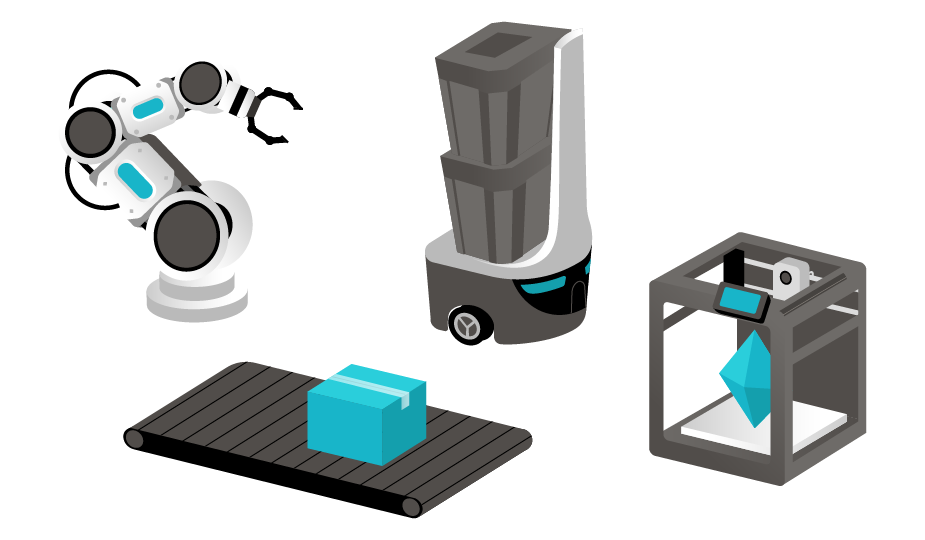
- Robotic arms: Multi-axis coordination depends on accurate position feedback to ensure smooth and repeatable movement. When payload and reach change, the control system needs trustworthy feedback to maintain path accuracy and stable motion.
- Conveyor and Material Handling Systems: Speed synchronization and load compensation require consistent velocity measurement. Encoder feedback helps keep timing predictable, which directly supports throughput and reduces jams or mis-indexing.
- Autonomous Mobile Robots (AMRs): Accurate odometer readings depend on reliable wheel rotation feedback for navigation and positioning. When the system can trust the encoder signal, mapping and motion planning become more stable.
- CNC, Gantries, and Machining Systems: Tight tolerances depend on stable feedback, especially as systems warm up over long runs. Encoder consistency influences repeatability, surface finish, and the ability to hold targets without constant retuning.
Across these systems, encoder performance is not a background detail. It directly impacts throughput, product quality, safety margins, and how confidently a machine repeats the same job thousands of times.
Beyond Motion: Enabling Data-Driven Automation
Encoder feedback also contributes to system intelligence at a higher level. As factories become more connected and data centric as part of Industry 4.0, motors serve more and more as measurable, data-producing assets. Reliable encoder feedback can support diagnostics and optimization, such as anomaly detection for predictive maintenance, reducing downtime significantly. It can also help with load monitoring and slip detection, better energy optimization with tuning, and adaptive motion control as conditions change.
Perhaps the most important aspect of all this automation is trusting in the equipment and the data that comes from that equipment. If the feedback is stable and dependable, the system can use it to learn, detect drift, and flag problems early. If feedback is inconsistent or affected by the environment, the data can become noisy, causing you to either miss problems or have false alarms. In both scenarios, you lose the gain that a smart factory initiative is trying to provide.
Summary
Intelligent motion control in factory automation is built on accurate, reliable feedback. Motor drives convert electrical power into controlled motion, but encoder feedback transforms that motion into a measurable, correctable, and optimizable system. By enabling precise positioning, stable velocity control, and data-driven diagnostics, encoder technology forms the backbone of modern automation platforms. As factory systems continue to demand higher precision, greater uptime, and increased intelligence, feedback performance will remain a defining factor in motor design.
Key Takeaways
- Encoders enable precise, closed-loop motor control, delivering data for real-time position, velocity, and direction feedback for accurate and repeatable motion.
- Closed-loop systems improve performance and reliability, correcting for load changes, reducing errors, and minimizing mechanical stress.
- Robust encoder technology is critical in industrial environments, where dust, vibration, oil, and temperature can degrade performance.
- Capacitive encoders enhance durability and accuracy, avoiding optical failure modes and resisting contamination and interference.
- Encoder resolution must align with system bandwidth, balancing accuracy with processing limits and motor speed.
- Absolute encoders improve uptime and simplify design, eliminating homing and enabling reliable startup with strong noise immunity.
- Encoder feedback supports advanced automation, including robotics, AMRs, CNC systems, and predictive maintenance in Industry 4.0 environments.
 Tags:
Tags:
Additional Resources